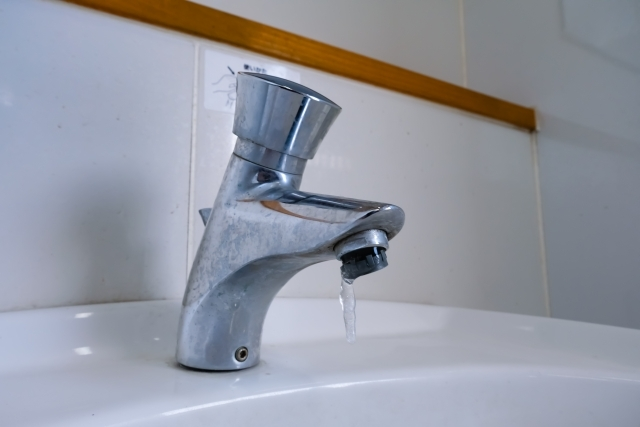
Winter nights in Korea get very cold, and the water meter (수도계량기) and pipes are the first things to freeze. Freezing water expands and can crack the meter glass or burst a pipe. Tenants, especially in corridor-type apartments (복도식 아파트), row houses and low floors, should prepare early.
In Korean this is called 동파 (dongpa), meaning "bursting from freezing".
When does it happen?
According to the Seoul Metropolitan Government, the risk rises when temperatures stay below -10°C for two days or more, and rises sharply below -15°C. In the 2021-2022 winter, Seoul recorded 3,621 frozen-meter cases. The causes were:
- 67.7% poor insulation.
- 24% the occupants being away for a long time.
- 6.5% meters left exposed.
So the two most important things are good insulation and not letting water stand still in extreme cold.
How to prevent it
Seoul sums it up in three rules: fill, open, thaw slowly.
- Fill the meter box: pack dry insulation such as bubble wrap, old clothes or newspaper into the box, seal the gaps where the pipes enter, close the lid and cover the box with a large plastic sheet.
- Let a tap drip in extreme cold or when you are away: moving water is harder to freeze. A guide from Seoul: between 0 and -10°C the tap should fill a paper cup in about 45 seconds; below -10°C, in about 33 seconds. You can use the water for plants or mopping.
- Do not leave the meter exposed: if the meter box is cracked, shifted or missing its lid, tell your landlord or building management right away.
A few general habits also help (common advice, not from Seoul's guidance): when you are away, set the boiler to away mode (외출) instead of switching it off, and open the cabinet under the sink so warm air reaches pipes on outside walls.
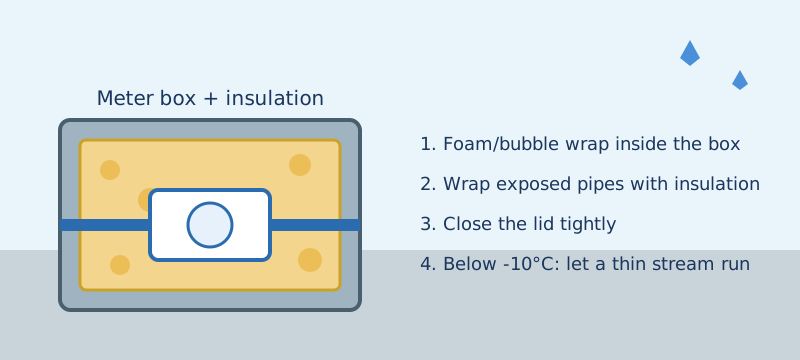 Illustration: insulating a water meter box (original drawing by Cẩm Nang Hàn Quốc).
If the meter or pipe has frozen
- Thaw slowly: wrap it in a warm, damp towel or use lukewarm water, then warm it up gradually. A hair dryer on a warm setting also works.
- Never use water above 50°C: it can damage the meter and force a replacement.
- Do not use an open flame (general safety advice): it is a fire risk and damages pipes.
- Bulging or cracked meter glass? That means it has burst. Shut the water valve if you know where it is, then report the problem.
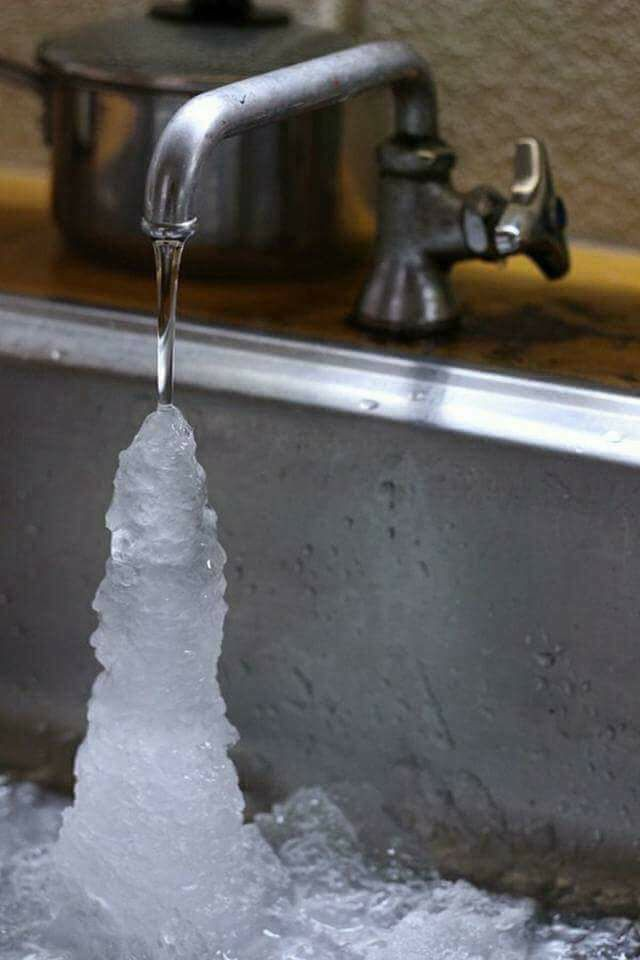 Photo: a frozen tap, with the running water turning into a column of ice (supplied by the site admin).
Who to report it to
According to Seoul, you can report it in any of three ways:
- Dasan Call Center: 120 (for Seoul; other cities may use different numbers).
- The KakaoTalk chatbot "아리수톡" (Arisu Talk).
- Your local waterworks office (관할 수도사업소).
If you rent or live in an apartment complex, tell building management (관리사무소) or your landlord first, since they usually handle the meter and know who to contact.
Who pays for a new meter?
Under Seoul's revised rules (in force from 2022), if the meter is damaged only by cold weather, the city replaces it free of charge. But if the meter was not insulated, or the protective box was damaged, exposed or out of place, the user pays the full cost. For a standard 15 mm household meter the example cost is about 41,000 won (27,000 won for the meter plus 14,000 won for installation). Proper insulation therefore saves you both a water problem and a bill.
Other cities (Busan, Incheon, Gyeonggi and so on) may have their own rules and phone numbers. Ask your local waterworks office.
Quick summary
- Be careful when it stays below -10°C for two days or more.
- Insulate the meter box and let a tap drip in extreme cold or when you are away.
- Thaw with lukewarm water (under 50°C), never boiling water or flames.
- Report problems to building management or 120 (Seoul).
Note: the information above mainly follows guidance from the Seoul Metropolitan Government. Rules and costs may change, so check with the water authority where you live.
Sources: Seoul Metropolitan Government, "수도계량기 동파 예방법 3가지…올해부터 수리비 지원" (9 Nov 2022); WikiTree, "본격 한파 시작…수도계량기 동파 예방·대처·신고법 총정리" (8 Jan 2025). This English version was compiled by Cẩm Nang Hàn Quốc.