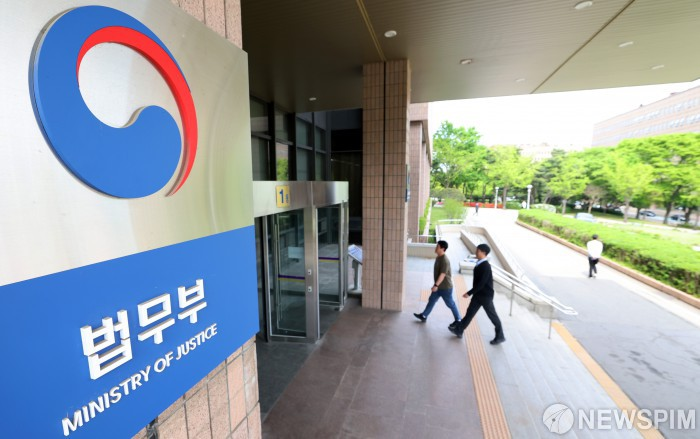
On 7 October 2026 the Ministry of Justice (법무부) announced the results of a council set up to reform visas for international students. The council launched on 20 April 2026, brought together ministry officials and experts in higher education and immigration, and met for about five months. The aim is to shift policy from "attracting" students to "nurturing and retaining" them, as the number of international students has reached about 350,000 (August 2026), up from roughly 200,000 in 2022.
These are policy directions and proposals. Many items need legal amendments or agreement from other ministries, so nothing takes effect immediately. The main points, compiled from Korean press reports, are below.
1. Financial-proof waiver for strong Korean
Students with TOPIK Level 4 or Level 4 of the Korea Immigration and Integration Program (KIIP, 사회통합프로그램) would be exempt from proving financial capacity when applying for a visa.
2. Wider study-expense deposit system
For students from countries judged to carry a higher risk of illegal stay or unauthorized work, the ministry will expand a deposit system (유학경비 보증금제) under which students place funds for a set period. One outlet says it is modelled on Germany and Canada and will expand in stages from the first half of 2027. The articles I read give no deposit amount and do not list countries, so it is unclear whether Vietnam is affected.
3. Part-time work: simpler criteria, higher Korean bar
- Eligibility would rest on Korean proficiency and academic results alone.
- The Korean requirement would rise to KIIP Level 3.
- Universities would issue a part-time employment confirmation, replacing most extra documents.
- According to Kyosu, after a one-year grace period, from 2028, students without the required Korean level would be restricted from part-time work. Other outlets do not mention this date.
- Weekend, evening, online or English-track programmes judged to exist mainly to enable part-time work would lose visa benefits, even at universities holding an internationalization certification.
Current part-time rules (hours by level, permits, banned jobs) are summarized in Part-time work rules for students in Korea. Existing rules continue to apply until new ones are announced.
4. Oversight of schools and study agencies
- Standard procedures and materials so universities can actually verify overseas degrees and transcripts.
- A registration system for overseas study agencies, working with Korean missions abroad, to bring informal brokers under oversight.
5. After graduation: job search and staying on
- D-10 job-seeker visa: 1 to 3 years depending on Korean level and job preparation (up to 2 years if the Korean requirement is not met).
- STEM graduates with sufficient Korean who want manufacturing jobs could switch to the E-7 skilled-worker visa.
- A practical job visa for graduates of specialized technology master's programmes (provisional name) is planned, opening a route from D-2 to F-2.
- A multiple-entry alumni visit visa (provisional name) valid up to 10 years is planned.
- A "gap year" track (provisionally D-2-8) for students from OECD countries, plus regional visas and a student startup visa (D-8-4).
6. Institutions and law
- Five student visa and residence support centers (provisional name) at regional immigration offices.
- A new chapter on student visas and part-time work in the Immigration Control Act.
- Regular publication of data analysis on student stays.
Timeline
Measures within the ministry's own remit start in the second half of 2026. Items needing other ministries' agreement go through a cross-ministry council. Apart from the 2027 and 2028 dates above (seen in one outlet only), the reports give no specific effective dates.
What should Vietnamese students do now?
- No need to change your paperwork yet. Current rules remain the basis for visas and work permits.
- Study Korean early. TOPIK 4 could help with the financial-proof waiver, and Korean standards for part-time work are trending upward.
- Use only transparent agencies and keep copies of documents, contracts and receipts.
- Follow official announcements from the Ministry of Justice and HiKorea, or call 1345 (press 4 for Vietnamese).
Note: this is based on press reports of 7 and 8 October 2026 about proposals that are not final, and details may change. This is not legal advice; check official notices from the Ministry of Justice, HiKorea and your school.
Sources: Newspim, 7 Oct 2026; Asia Economy, 7 Oct 2026; Kyosu (교수신문), 8 Oct 2026. This English version was compiled by Cẩm Nang Hàn Quốc.