Part-time jobs help many students cover living costs, but in Korea a student visa holder cannot simply start working. You need a part-time work permit (시간제취업허가) and may start only after it is approved. Breaking the rules can bring heavy penalties and affect your visa. This article summarizes the rules in force in 2026.
Who can apply?
- D-2 (university and graduate students): you can apply as soon as you meet the conditions, with no 6-month wait for the usual D-2 subtypes.
- D-4 (language institute students): you can apply only 6 months after your change to, or start of, that status.
- Grades (D-2): an average of C or 2.0 or higher in the previous semester. In a first semester with no transcript, this may be waived if your school and the immigration office confirm.
- Attendance (D-4): average attendance of 90% or higher.
Weekly hour limits
Hours depend on your level of study and Korean ability (TOPIK or the equivalent KIIP stage):
| Group | Korean standard not met | Korean standard met | With preferential conditions |
|---|---|---|---|
| D-4 (TOPIK 2) | 10 hrs | 20 hrs | 25 hrs |
| Associate / bachelor's years 1-2 (TOPIK 3) | 10 hrs | 25 hrs (weekdays) | 30 hrs (weekdays) |
| Bachelor's years 3-4 (TOPIK 4) | 10 hrs | 25 hrs (weekdays) | 30 hrs (weekdays) |
| Master's / doctoral (TOPIK 4) | 15 hrs | 30 hrs (weekdays) | 35 hrs (weekdays) |
Points to note:
- Preferential hours (+5) are not automatic. Examples: studying at a certified university, an average of A or higher last semester, or TOPIK level 5. The list of certified universities can change each year.
- D-2 students who meet the Korean standard have no separate hour limit on weekends, public holidays and vacations, but only within the authorized workplace, duties and period. D-4 students do not get this exemption.
- Several workplaces: hours are added together.
- English-track programs: English test scores (such as TOEFL iBT 71 or IELTS 5.5) can replace TOPIK if your school and immigration recognize them.
Sources differ on some figures (especially for D-4 and the preferential hours), so confirm with your school's international office.
How to apply
- Agree with the employer on wage, location, duties, period, working days and hours.
- Prepare a standard labor contract stating the workplace name and address, duties, period, hourly wage, working days and hours.
- Get your school's confirmation (international office) on the Part-time Employment Confirmation Form.
- Apply through HiKorea or book an appointment at your immigration office.
- Start work only after approval. An online receipt is not a permit.
Documents usually include: passport, alien registration card, application form, confirmation form, certificate of enrollment, transcript or attendance certificate, Korean proficiency proof, the standard labor contract and a copy of the workplace's business registration. The fee is 20,000 won. A permit is typically valid for up to one year within your stay, and some guides say up to two workplaces (one for D-4).
If you change employer, add a workplace or change duties, check again and get a new permit before you start.
Jobs usually allowed and usually restricted
Usually allowed: assistant work at restaurants and cafés; shop sales and stocking; office, event and tourist-information assistant; interpretation assistant; duty-free shop sales; study-related assistant work.
Usually restricted or banned:
- Construction.
- Manufacturing (possible exceptions at TOPIK or KIIP level 4 or higher, but only with prior approval for the specific workplace).
- Delivery, courier and designated-driver work.
- Private tutoring and language teaching for minors (activities belonging to other visas).
- Door-to-door sales and insurance agent work.
- Work through dispatch, subcontracting or brokers.
- Workplaces too far from school or home, and businesses that violate public morals.
Screening results can differ for the same type of business, depending on the duties, registration type and location.
Minimum wage
The 2026 minimum wage is 10,320 won per hour, for all industries and including foreign workers. The wage in your contract cannot be lower.
What are the penalties?
Working without a permit, before approval, at the wrong place or doing the wrong duties, exceeding your hours or working in a banned industry can all count as illegal employment. For students this can mean up to 3 years in prison or a fine of up to 30 million won, a recommendation to leave Korea, deportation, cancellation of status and difficulty getting visas later. Employers are penalized too.
Delivery work without a driving licence also breaks the Road Traffic Act and can lead to visa cancellation and deportation.
Practical tips
- Keep your permit and check the workplace, duties, period and hours on it.
- Be truthful about the job in your application.
- Do not start before approval, even if the boss says "just start first".
- On-campus work may have its own rules, so ask the international office first.
- Call 1345 (press 4 for Vietnamese) or check HiKorea if you are unsure.
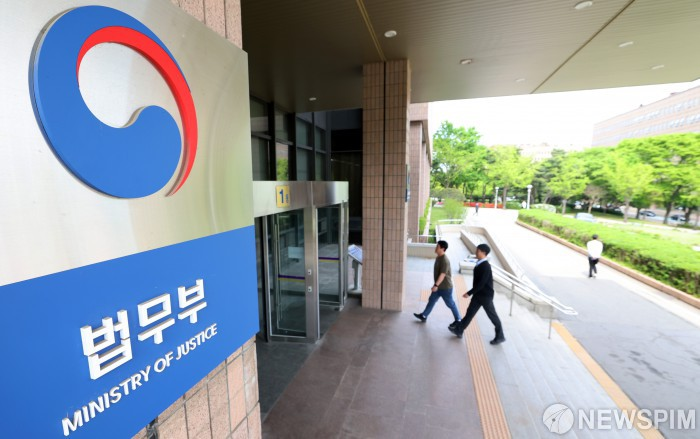
Note: part-time work rules change often and depend on your case. Check HiKorea, the Ministry of Justice and your school. This is not legal advice.
Sources: JOBPLOY, "2026 Guide to Part-time Work Permits for International Students (D2) and General Trainees (D4)" (based on HiKorea guidance of 9 July 2026); spt.gea.sc.kr, "D-2/D-4 Part-Time Work Permission in Korea"; Sungshin Women's University notice on part-time work. This English version was compiled by Cẩm Nang Hàn Quốc.